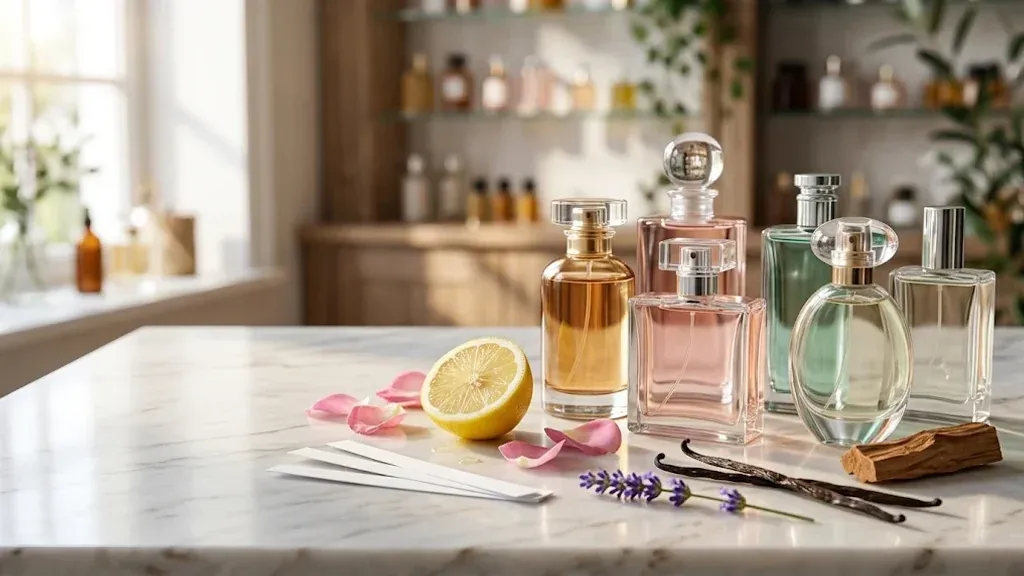
Choosing a perfume is not about finding the one that lasts longest or has the highest concentration. It is about finding a scent you enjoy wearing. To make a better choice, consider three things: how it smells, how it develops on your skin and when you want to wear it.
What perfume concentration tells you
Concentration is the percentage of aromatic oil (the concentrate that carries the scent) dissolved in alcohol and water. The higher that percentage, the denser a fragrance tends to be and, usually, the higher its price. The names on the label — *eau de cologne*, *eau de toilette*, *eau de parfum*, *parfum* — show where a perfume sits on that scale.
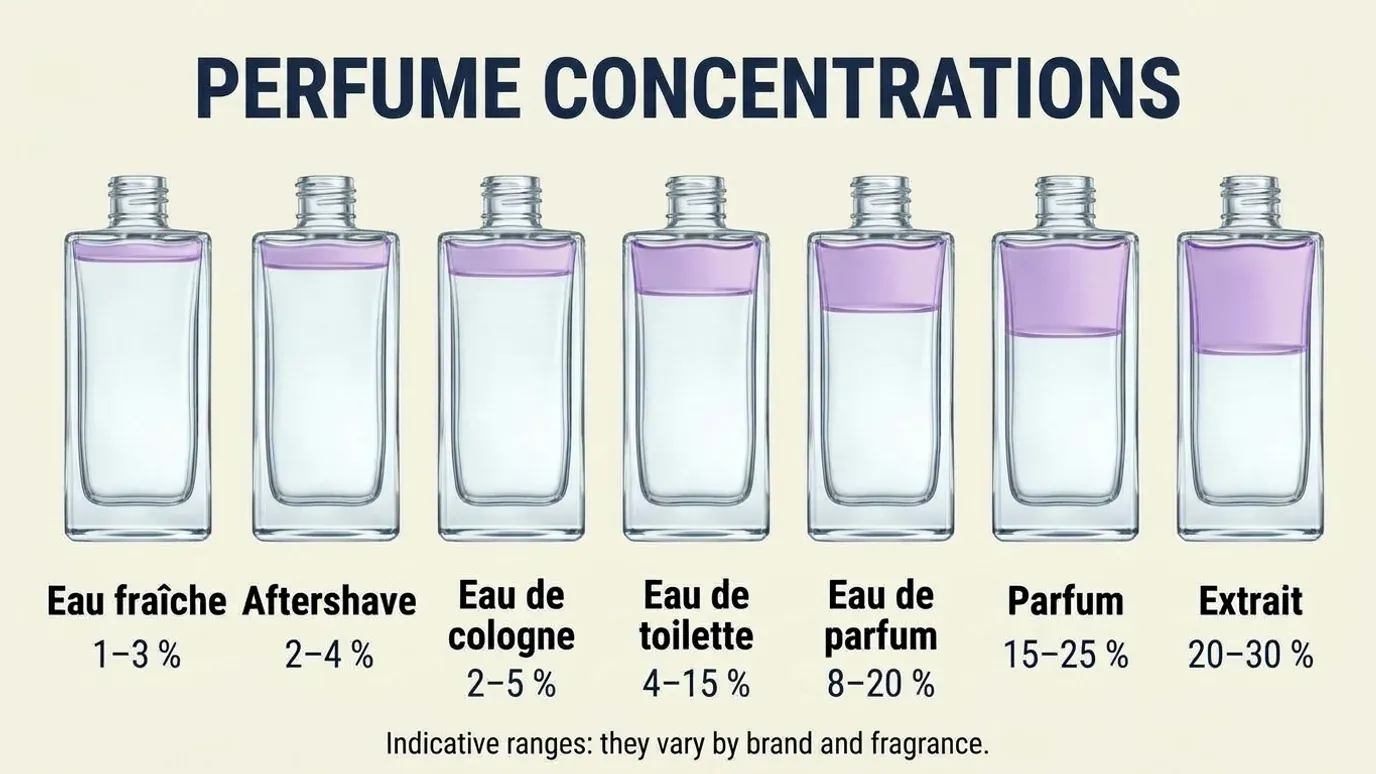
These are the most common concentrations, from lowest to highest, with indicative ranges:
| Type | Aromatic concentrate | How it usually feels |
|---|---|---|
| Eau fraîche | 1–3% | Very light and fleeting; meant for refreshing throughout the day. |
| Aftershave or splash | 2–4% | Soft and low-key; applied generously after shaving or showering. |
| Eau de cologne (EDC) | 2–5% | Fresh and bright, led by citrus; discreet presence. |
| Eau de toilette (EDT) | 4–15% | Light and pleasant for daytime, work or hot weather. |
| Eau de parfum (EDP) | 8–20% | Balanced presence and wear; very common for everyday and evening. |
| Parfum | 15–25% | Rich and enveloping, with more body than an EDP. |
| Extrait or perfume extract | 20–30% | The most concentrated: dense and close to the skin, ideal for special occasions. |
As you can see, the ranges touch: a strong EDT can resemble a light EDP. There is also no universal scale forcing every brand to use the same percentages, and some use “parfum” and “extrait” almost interchangeably. Treat the table as a compass, not an exact measurement.
Commercial tags such as “intense”, “absolu” or “elixir” do not correspond to a fixed percentage either: they signal a stronger or different character, not a specific figure.
Even two versions of the same fragrance can differ in more than concentration: the formula and balance of notes may change. An EDP is therefore not automatically better, stronger or longer-lasting than an EDT. Longevity and sillage — how far other people can smell a fragrance — also depend on its composition and how it wears.
Treat concentration as a clue, not a promise. If you like a scent but one version feels too strong, look for a lighter concentration or try fewer sprays. If longevity matters to you, test that particular fragrance rather than relying on the letters on the bottle.
Find the scent family you enjoy
Scent families group perfumes by their dominant characteristics. They are a useful map, not rigid categories: many fragrances blend several styles, and classifications can vary.
- Fresh or citrus: often suggests citrus, herbs or clean, airy notes.
- Floral: can range from light, bright flowers to intense or powdery bouquets.
- Woody: covers dry, creamy, earthy or resinous profiles, depending on the woods and accords.
- Ambery or spicy: tends to feel warm and enveloping, with spices, resins or sweet facets.
- Gourmand: evokes appetising notes such as vanilla, chocolate, caramel or ripe fruit.
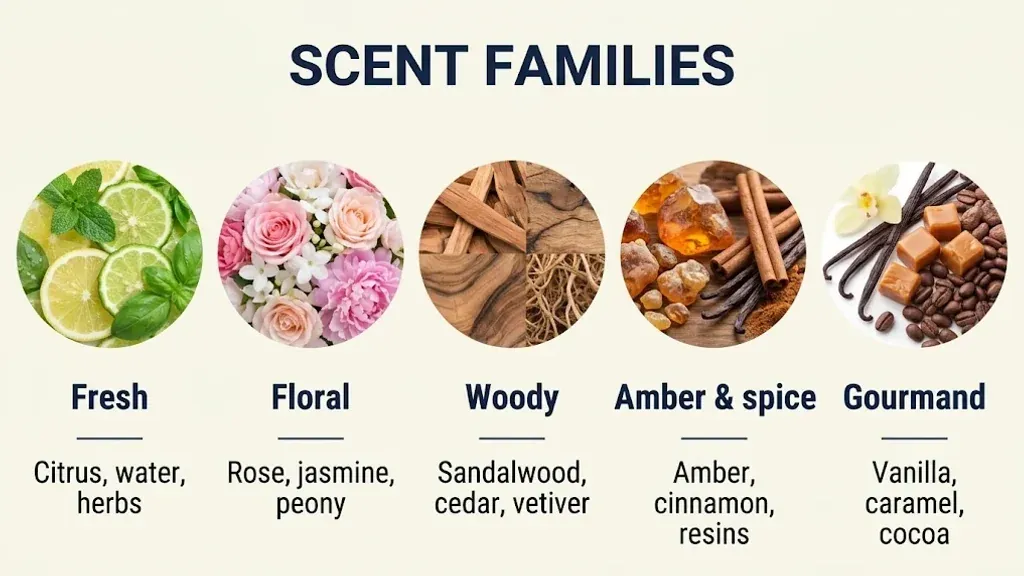
Think of perfumes you already enjoy and look for what they have in common: citrus, flowers, woods or vanilla? That can help you choose what to try, but do not rule out a scent based on its label alone. The same note can smell different depending on what it is combined with.
How to test a perfume before buying
- Start with a blotter. It helps you quickly rule out scents you do not like and compare first impressions without applying several perfumes at once.
- Try your favourites on skin. A blotter helps narrow the choices, but it is not a substitute for a skin test. Apply the fragrance as directed and do not rub the area.
- Do not decide in the first minute. Smell the opening, then come back to it later: the scent can change as some notes evaporate and others remain.
- Ask for a sample and wear it in your routine. You can check whether you still enjoy it, whether it suits your activities and whether its intensity feels comfortable throughout the day.
- Write down your impressions. Note what you like at first and after several hours. Concrete notes are more useful than trying to remember a quick visit to the shop.
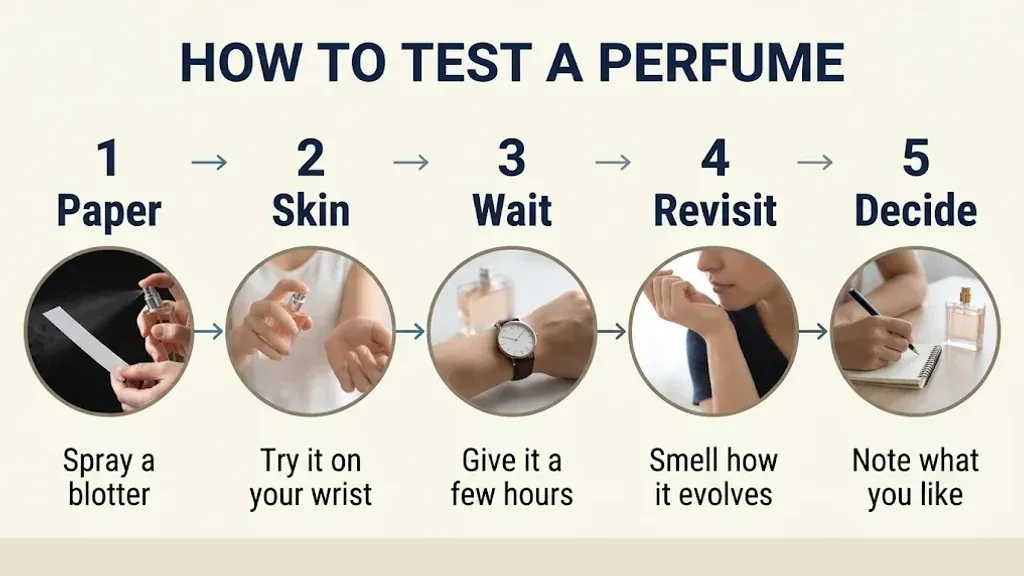
Try only a few fragrances per visit, and take a break if they start to blur together. A blotter helps you shortlist options; a skin test and sample give you time to decide without rushing.
Choose for where and when you will wear it
For work, public transport or shared spaces, you may prefer a subtle scent and fewer sprays. For going out or colder weather, something more enveloping might appeal. In hot weather, some dense compositions can feel more intense; a fresher option or a lighter application may be more comfortable.
There are no universal rules about gender, age, season or time of day. Think about your setting and what you enjoy: do you want a scent close to the skin or one that leaves a stronger trail? Will you wear it every day or for particular occasions? The right choice is the one that fits your life, not a label.
How long should a perfume last?
There is no ideal wear time for everyone, and concentration alone cannot predict it. The formula, amount applied, surroundings and skin all play a part; you may also stop noticing a scent before it has disappeared. For more on why a fragrance can wear differently on different people, read our guide to perfume and dry skin.
To compare two options, test them in similar conditions and smell them again throughout the day. Consider both how long they last and whether you enjoy the way they develop. A perfume that lasts for hours is not necessarily better if you do not like its scent.
A checklist before you buy
- Do I like it after the opening has faded?
- Am I comfortable with its intensity and sillage?
- Does it suit the occasions when I want to wear it?
- Have I tried it on skin or from a sample, not just on a blotter?
- Would I still choose it without knowing its popularity, price or bottle design?
If you are unsure, you do not have to decide in the shop. Note the name, ask for a sample and try it again another day. Taking your time is usually better than blind-buying based on a note, a trend or a promise that it will suit «everyone».
Sources checked on 17 November 2026: guide to scent strengths, concentration level chart, guide to fragrance families and fragrance FAQs.
Share your thoughts