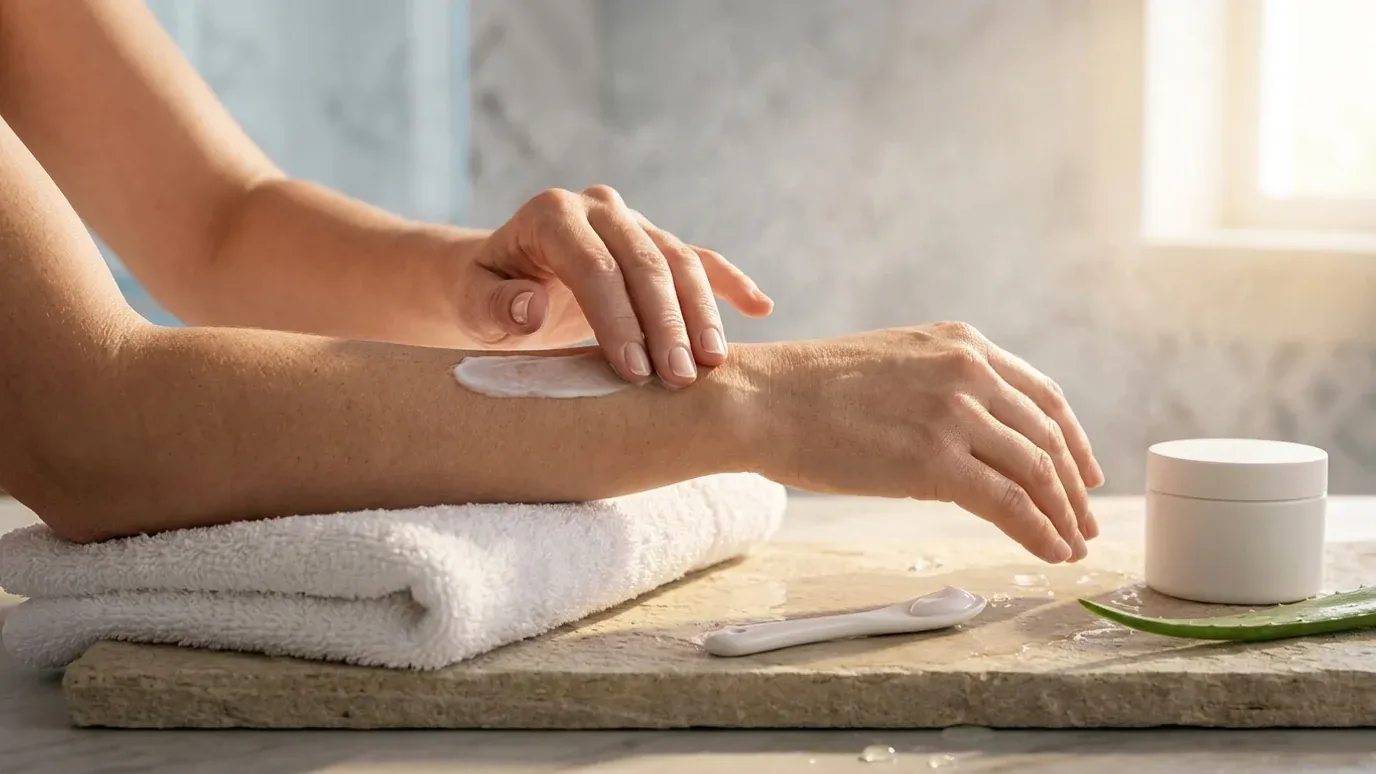
The same perfume does not always smell or last the same on everyone. That depends both on how each nose perceives its molecules and on how they are released from the skin. If your skin is dry, a fragrance-free moisturiser can improve comfort and prepare the surface; it cannot guarantee a specific number of extra hours.
Why perfume smells different on different people
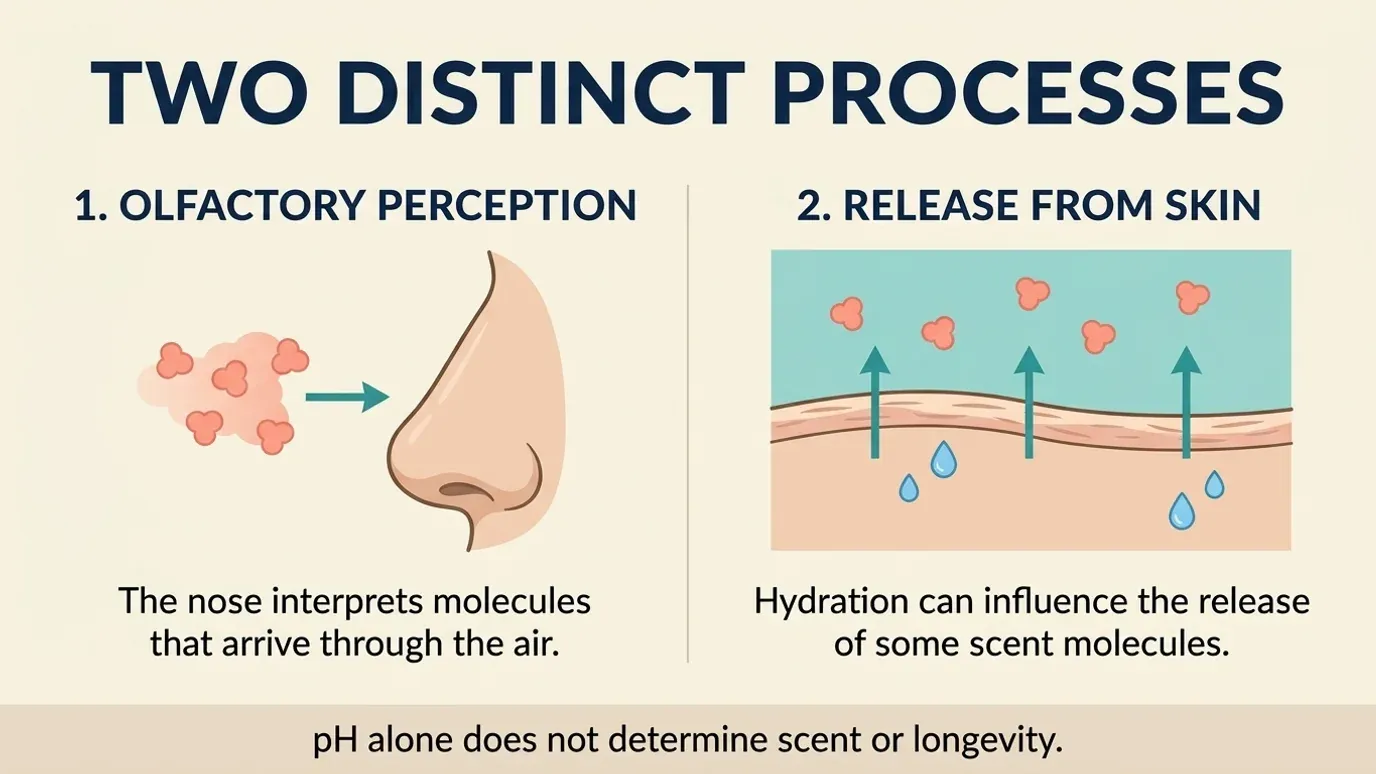
The first difference is the person smelling it: each olfactory system responds a little differently. Genetic variation in olfactory receptors can change the intensity or character a person assigns to certain molecules. The wearer can also become used to their own perfume and stop noticing it before other people do; that adaptation does not necessarily mean the fragrance has disappeared.
The scent’s development on skin can vary too. In an *in vivo* study published in 2025, the evaporation of different fragrance molecules varied between volunteers and depended on the molecule and physical skin properties, including hydration, water loss and roughness. The researchers did not test a finished perfume or compare these ten moisturisers: this is evidence that skin can matter, not a promise of longer wear from a particular product.
The perfume formula matters: more volatile molecules tend to be noticed earlier and dissipate sooner, while others remain longer. Ambient heat and humidity, application area and amount, clothing and the formula itself also count. That is why a single quick test is not a reliable way to compare two perfumes.
What changes when skin is dry
Dry skin can feel tight, rough or flaky; a disrupted skin barrier loses water more easily. Moisturising helps care for that barrier and relieve dryness. Since the release of some fragrance molecules has been associated with hydration and water loss, well-moisturised skin could produce a steadier evolution in some cases. The real effect depends on the perfume and person: there is no reliable conversion such as “this cream adds a set number of hours”.
A straightforward dermatology recommendation is to apply a fragrance-free cream or ointment while skin is still slightly damp after bathing, and reapply when needed. Before wearing perfume, let the moisturiser absorb and then apply the fragrance. This reduces the chance of mixing it with the smell of another formula and avoids a slippery layer.
Does skin pH change a perfume’s smell?
The skin surface is usually mildly acidic; a commonly cited guide is pH 4.5–5.5, although it varies by body site, age and other factors. That acidity contributes to the skin barrier and the activity of enzymes in the outermost layer.
That does not prove that “acidic” or “alkaline” skin makes a perfume smell better, worse, more citrusy or last longer. The evaporation study linked differences to hydration, water loss, roughness and the properties of each molecule; it does not make pH a universal explanation. There is no need to measure it or use products to “correct” it before applying perfume.
Ten fragrance-free moisturisers to prepare skin
This selection prioritises formulas that the brands describe as fragrance-free and sell in Spain. “Fragrance-free” means no fragrance is added to scent the formula; it does not guarantee a completely odourless product, since some ingredients have a smell of their own. These are moisturiser recommendations, not clinically proven perfume boosters.
The product images are illustrative and AI-generated from official references; some visual details may vary, and packaging can differ between sizes and markets.
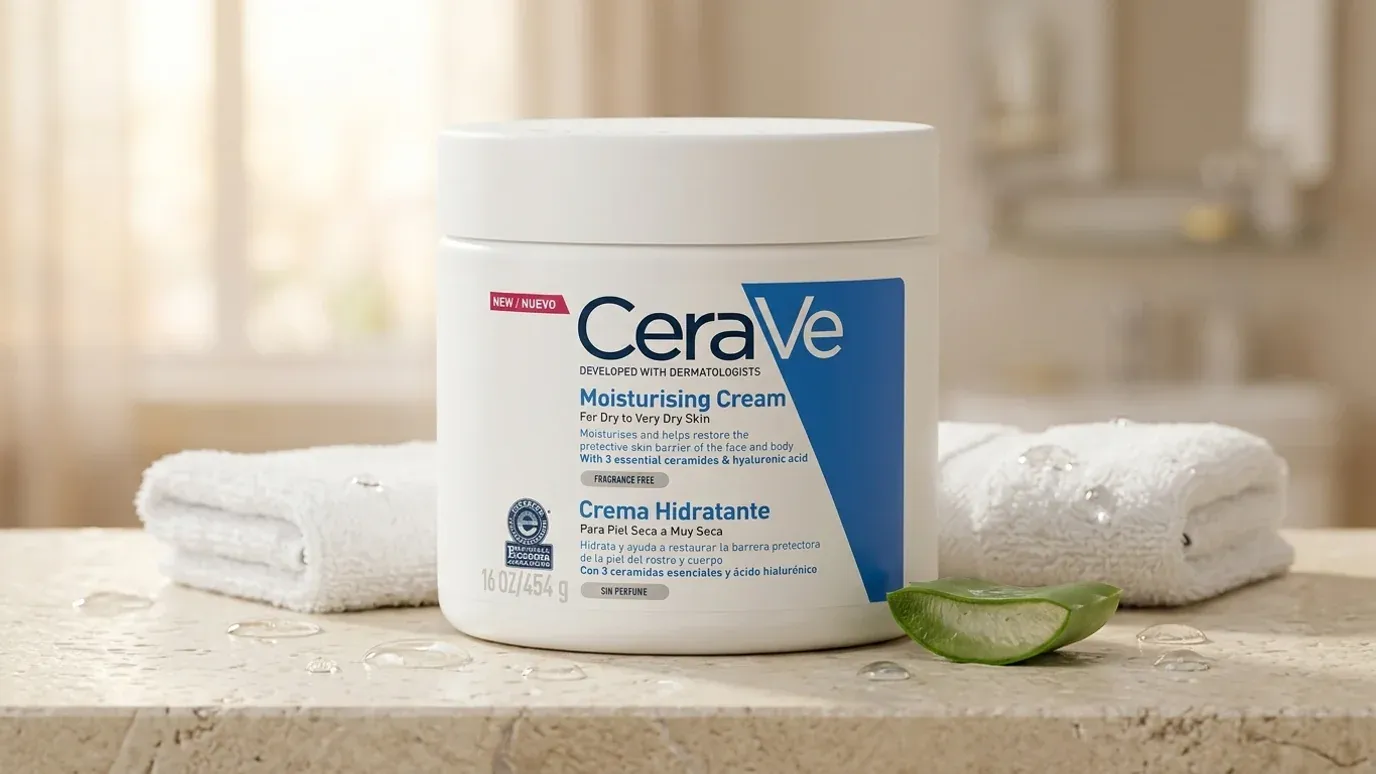
1. CeraVe Moisturising Cream
The richest option here for dry to very dry skin on the face and body. It contains ceramides and hyaluronic acid; its cream texture may feel more comfortable on rough patches or when a light lotion is not enough. The brand describes it as fragrance-free.
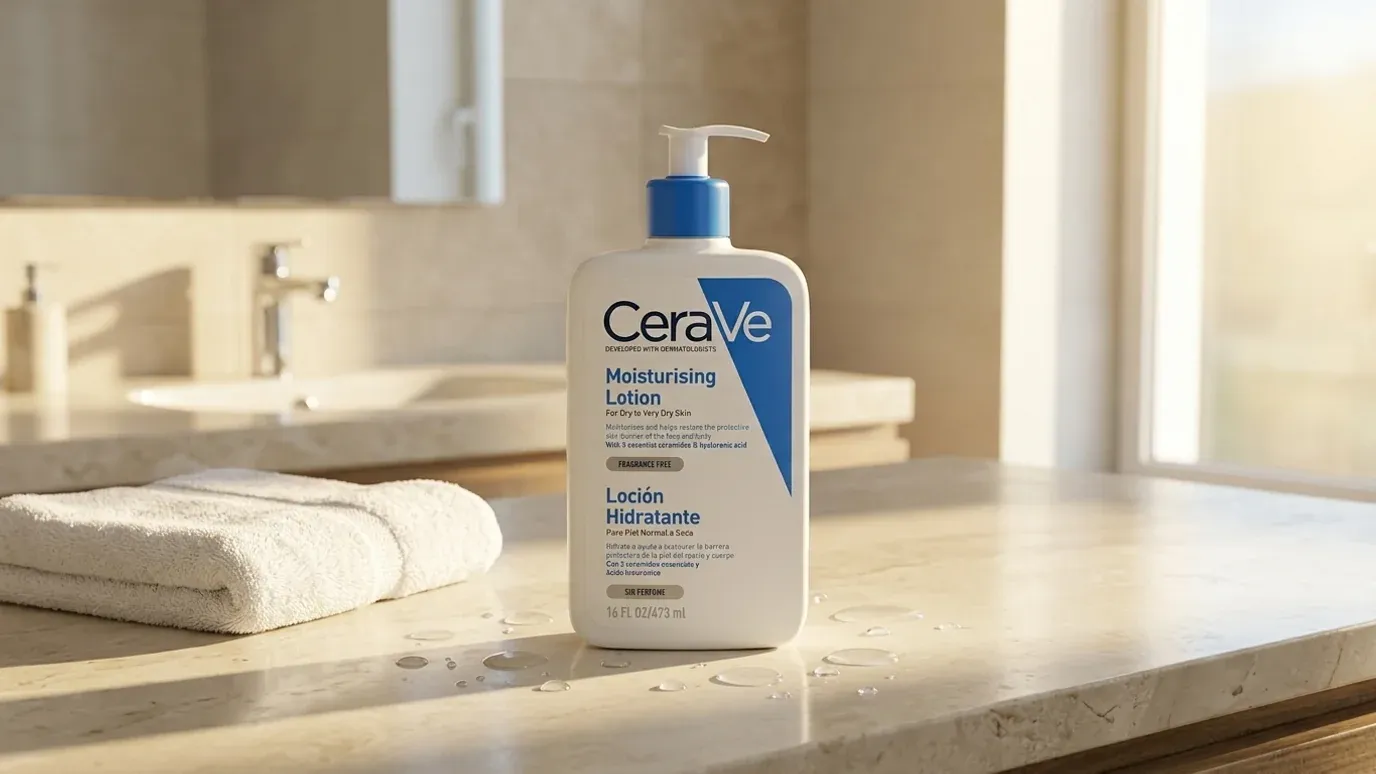
2. CeraVe Moisturising Lotion
A lighter everyday alternative for the face and body, also intended for normal to dry skin. The brand highlights ceramides, hyaluronic acid and a fragrance-free formula. It may be easier to spread in a thin layer on arms, neck or chest before applying perfume.
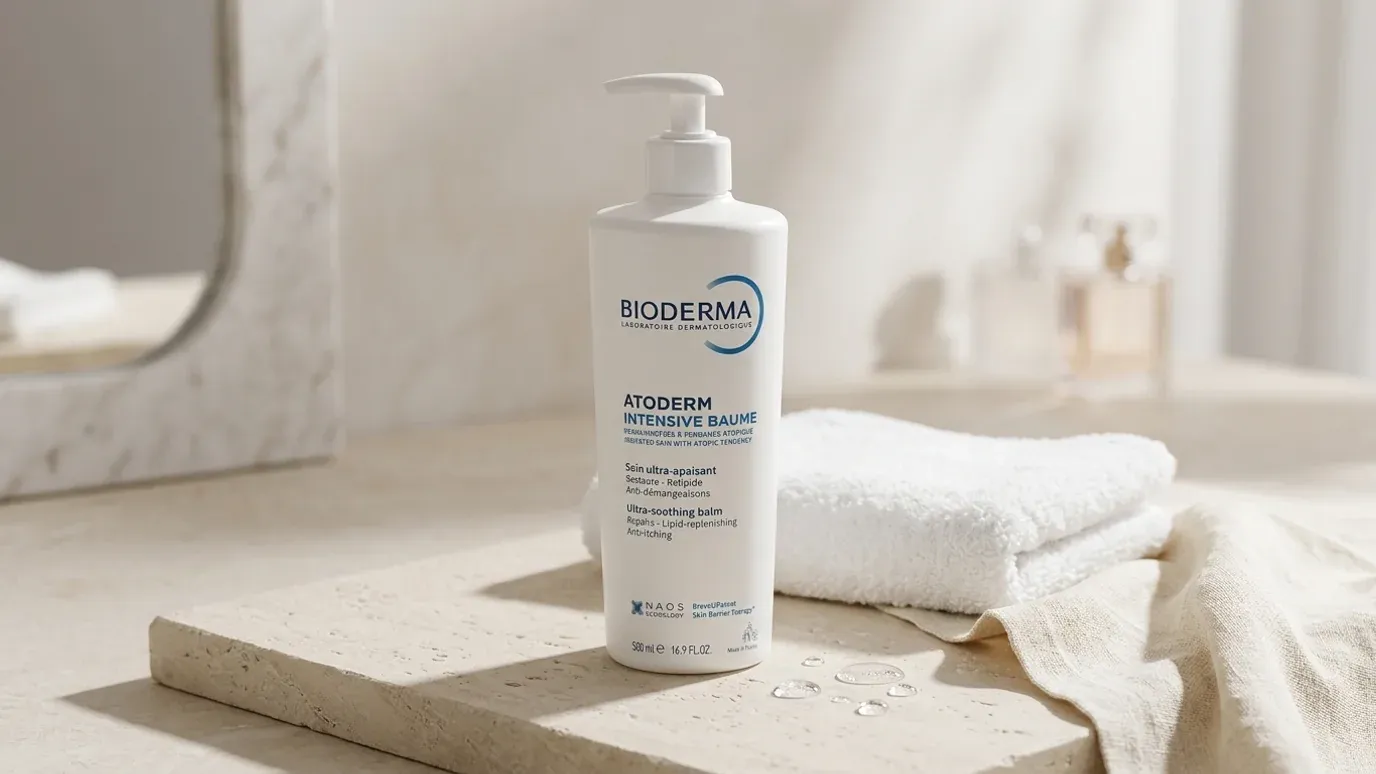
3. Bioderma Atoderm Intensive Baume
A body balm for very dry or atopy-prone skin that the brand describes as fragrance-free. Its nourishing texture is better suited to relieving dryness over larger areas; let it absorb before dressing or applying perfume.
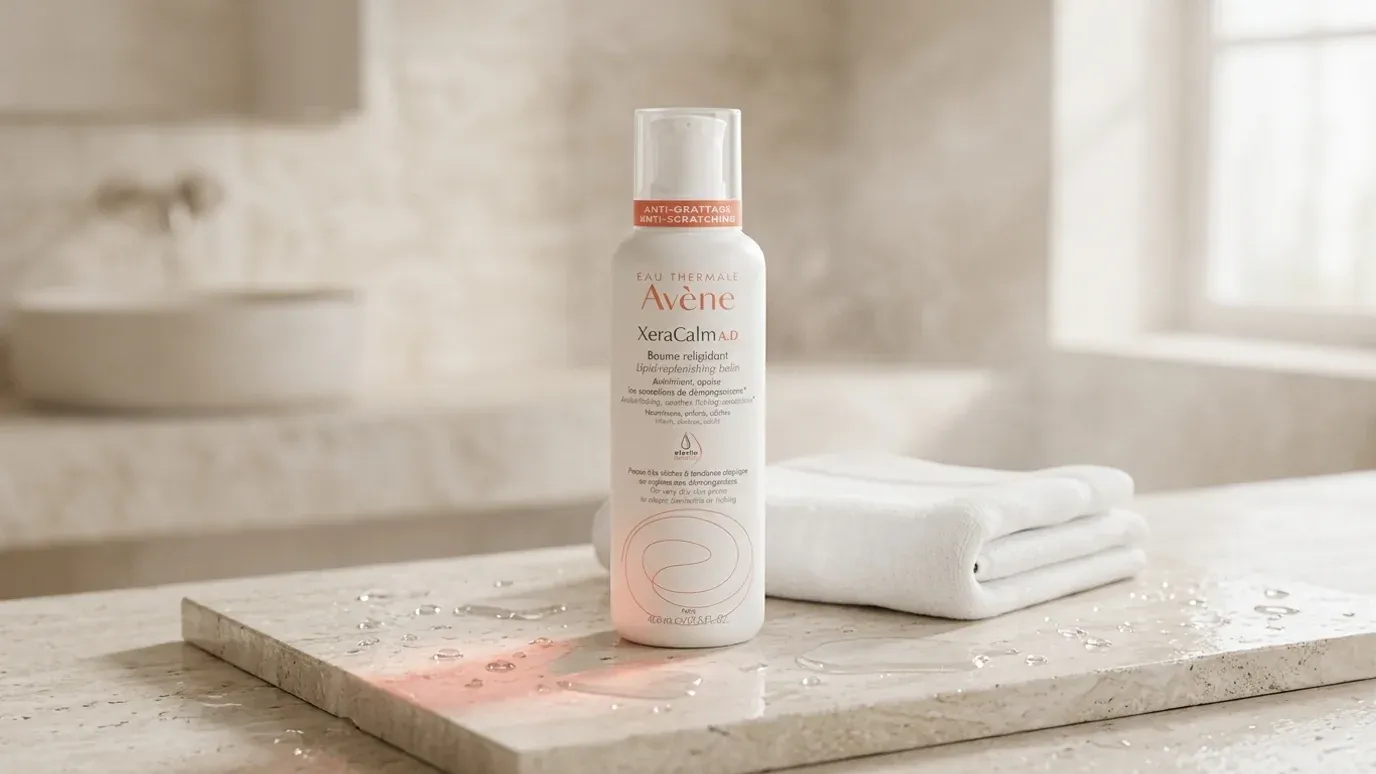
4. Avène XeraCalm A.D Lipid-Replenishing Balm
Another balm-textured option for dry, sensitive or eczema-prone skin. The brand describes it as fragrance-free and intended for the body; it may feel more enveloping than a lotion. If you have a skin condition, follow the label and your healthcare professional’s advice.
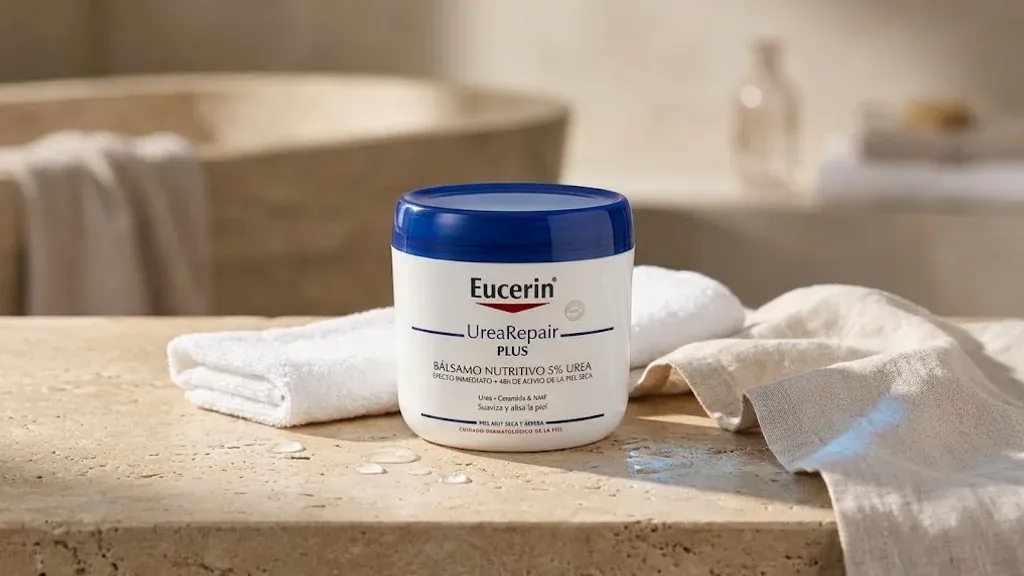
5. Eucerin UreaRepair 5% Urea Body Cream
A fragrance-free body cream with 5% urea for dry, rough skin. Urea helps hydrate and soften; it can sting cracked, irritated or freshly shaved skin, so this is not the best choice immediately before applying perfume to those areas.
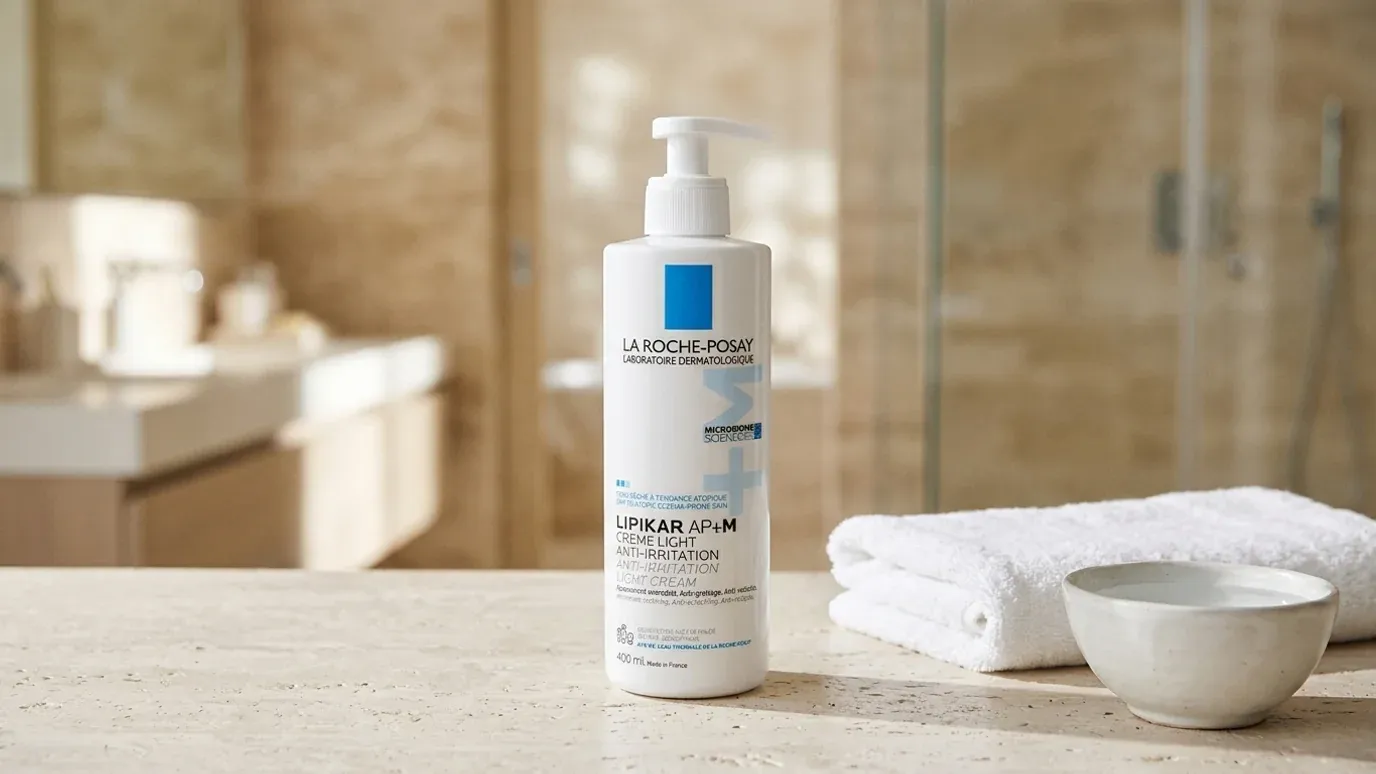
6. La Roche-Posay Lipikar Baume Light AP+M
A lightweight body cream for dry, atopy-prone skin. The brand describes it as fragrance-free, and its pump makes it easy to spread a thin layer over arms, neck or chest. Let it absorb before spraying perfume.
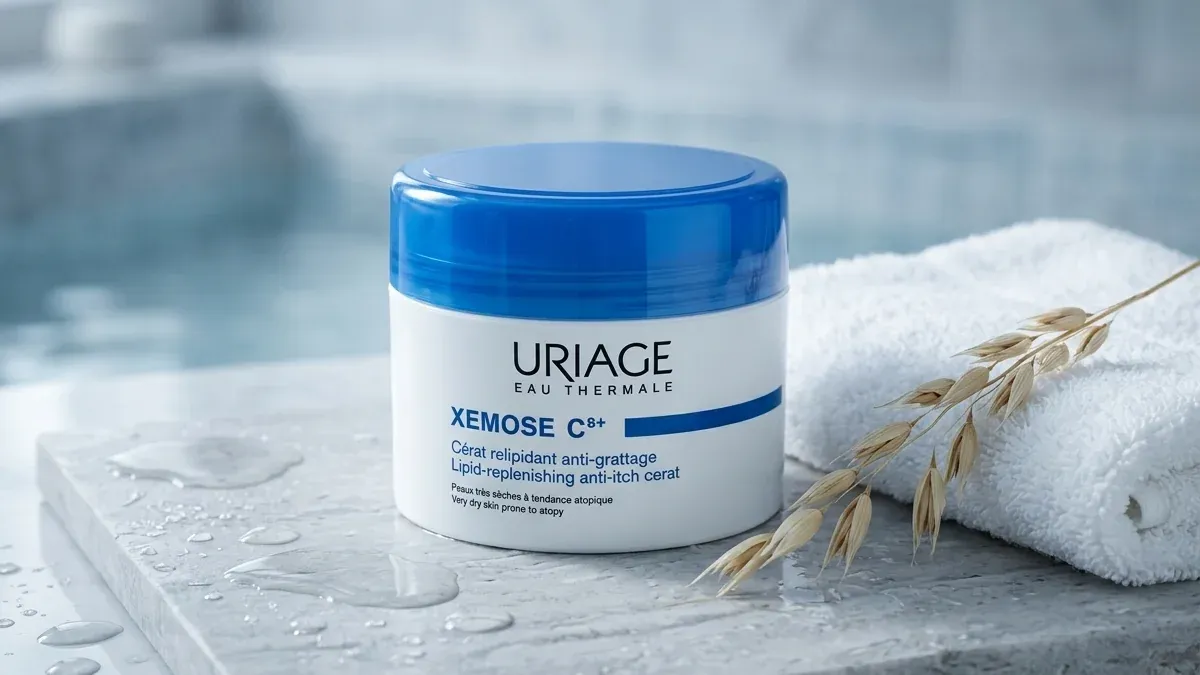
7. Uriage Xémose C8+ Cerato
A nourishing cerate for very dry skin. The published formula includes shea butter and biomimetic ceramides, and its INCI does not list Parfum. Its dense texture may suit dry areas that need a more enveloping layer; let it absorb before applying perfume.
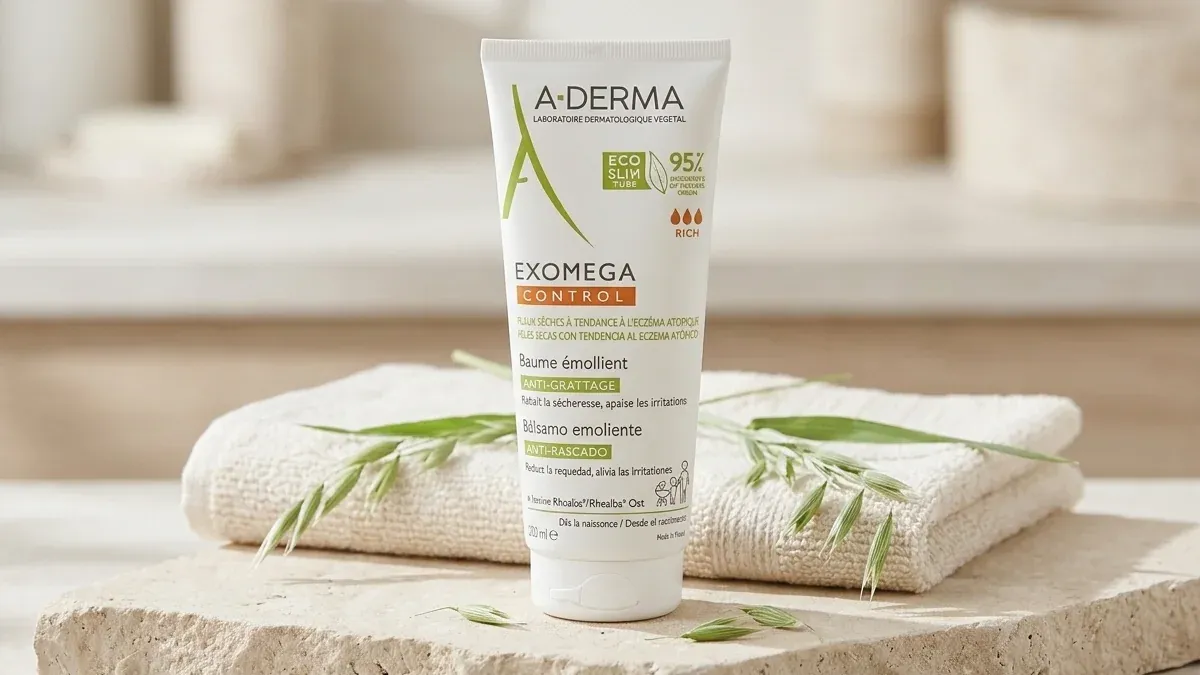
8. A-Derma Exomega Control Emollient Balm
A balm for dry, atopy-prone skin that the brand describes as fragrance-free. Its rich texture suits areas that need extra nourishment; let it settle before dressing or applying perfume.
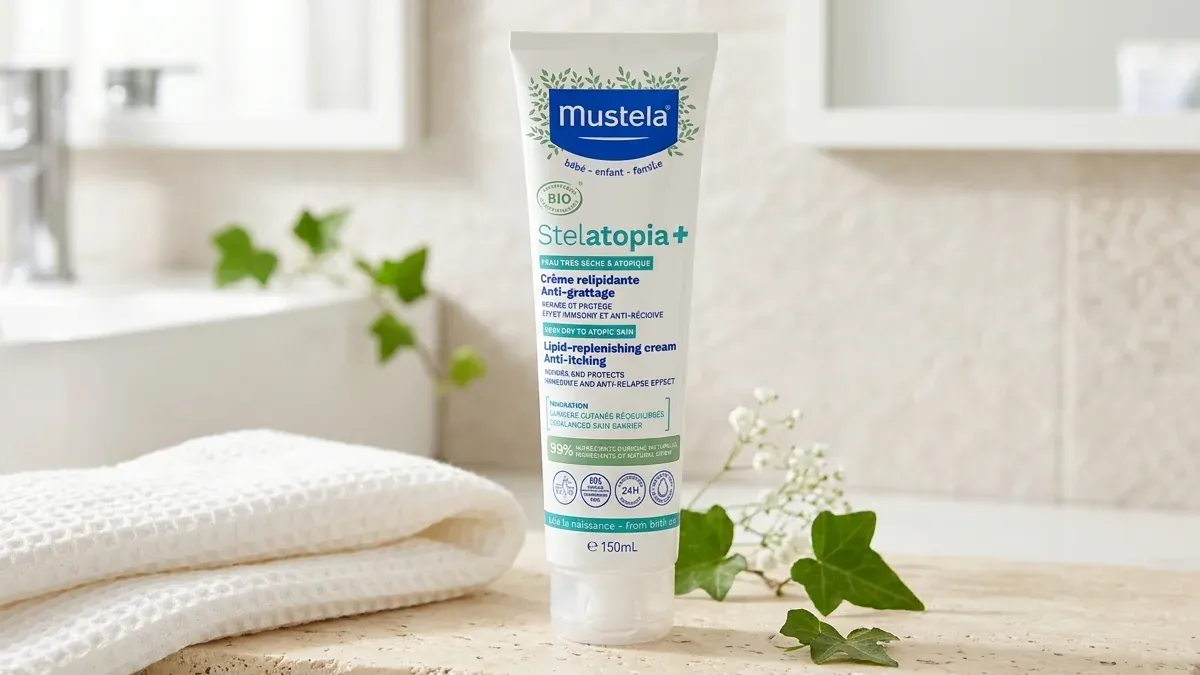
9. Mustela Stelatopia+ Lipid-Replenishing Cream
A lipid-replenishing cream for dry, atopy-prone skin. Mustela includes Stelatopia+ among its fragrance-free formulas; its creamy texture may feel comfortable on areas that dry out easily.
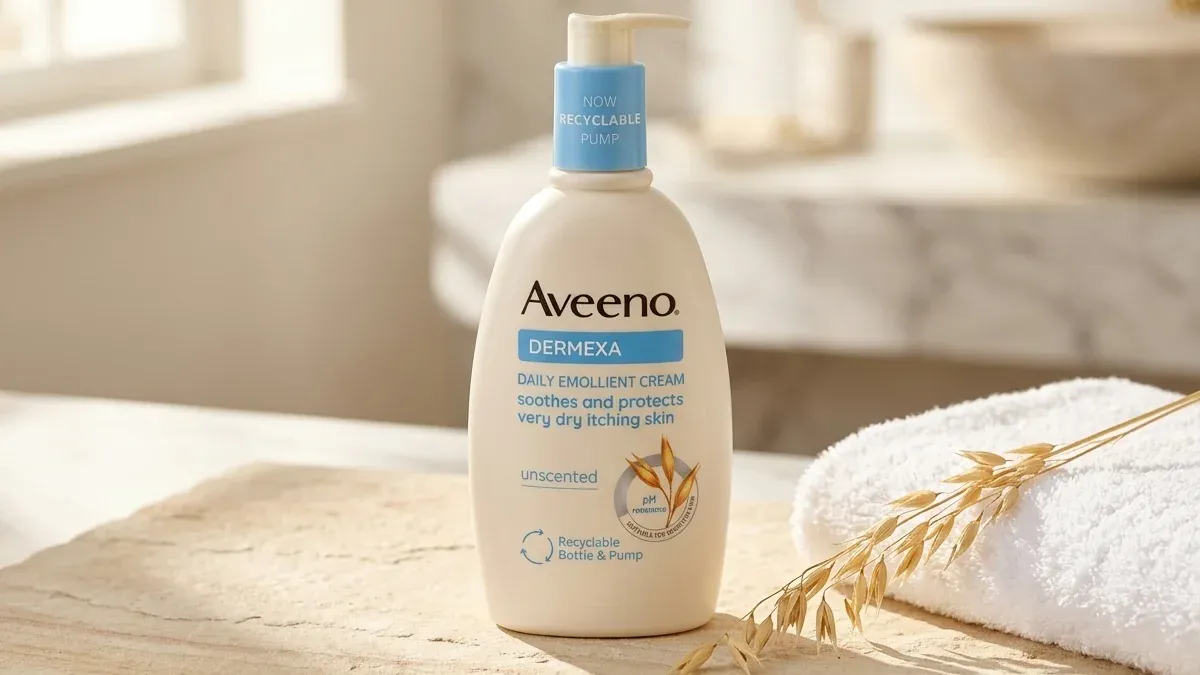
10. Aveeno Dermexa Daily Emollient Cream
An emollient cream for very dry, itchy skin. The official Dermexa ingredient list does not include Parfum and the formula combines oats with moisturising ingredients; check the packaging in case the formula changes.
How to apply moisturiser and perfume
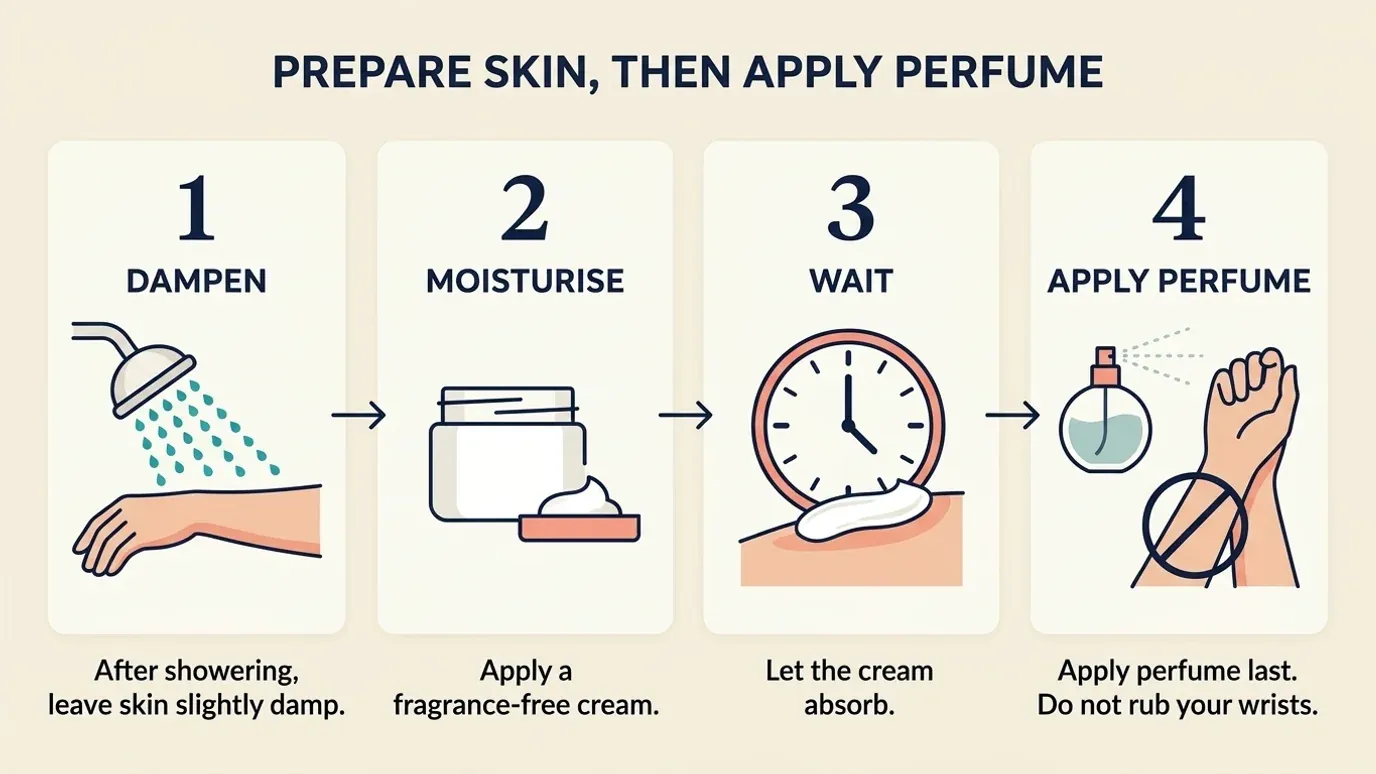
- After a warm shower, gently pat your skin dry and apply moisturiser while it is still slightly damp.
- Let the cream absorb before spraying. When testing a new fragrance, start on a small area of healthy skin.
- Do not rub your wrists together: friction changes how perfume disperses and does not help it last.
- Avoid applying perfume to irritated, cracked or actively eczematous skin. If dryness persists, it becomes very itchy or the skin breaks, seek professional advice.
- For a fair longevity comparison, use the same amount and area and check at intervals; you can also ask someone else to smell it to account for olfactory adaptation.
The takeaway
- pH is not a longevity dial: its better-established role here is supporting the skin barrier.
- Dry skin deserves moisturising in its own right: a less-dry surface could affect the evaporation of some molecules, but results will vary.
- Choose fragrance-free for comfort and compatibility: these ten options cover light and rich textures.
- Do not expect a fixed number of extra hours: perfume composition, surroundings, skin and each person’s perception still matter.
For a real-world comparison of fragrance performance and value, see our Mercadona men’s perfume alternatives guide (in Spanish).
Sources checked on 25 October 2026: study of fragrance-molecule evaporation on skin, review of stratum corneum acidity, dermatology advice for dry skin, study of genetic variation and olfactory perception, CeraVe Moisturising Cream, CeraVe Moisturising Lotion, Bioderma Atoderm Intensive Baume, Avène XeraCalm A.D, Eucerin UreaRepair 5% Urea, La Roche-Posay Lipikar Baume Light AP+M, Uriage Xémose C8+ Cerato, A-Derma Exomega Control, Mustela Stelatopia+, Stelatopia fragrance-free formulas, Aveeno Dermexa, La Roche-Posay Amazon listing, Uriage Amazon listing, A-Derma Amazon listing, Mustela Amazon listing, Aveeno Amazon listing and Mercadona alternatives guide.
Share your thoughts